
Festival Season Strategy: How Catalog, Distribution and UGC Data Drive Streaming Growth
Festival Season Strategy: How Catalog, Distribution and UGC Data Drive Streaming Growth
Festival Season Strategy: How Catalog, Distribution and UGC Data Drive Streaming Growth
Festival season compresses attention in the music industry like no other moment in the year.
Between April and September, global events such as Coachella, Glastonbury, Primavera Sound, Lollapalooza, and Rock in Rio create synchronized spikes in listening behavior, search activity, and user-generated content across DSPs and social platforms.
For music businesses — labels, distributors, and catalog operators — this is not simply a promotional window. It is a high-velocity distribution environment where catalog readiness, metadata accuracy, rights coverage, and real-time UGC visibility directly determine revenue outcomes.
The businesses that treat festival season as an operational system rather than a marketing moment consistently outperform those that react to it in real time.
The most visible impact of festivals is immediate streaming growth from live performances and viral clips. However, the real commercial effect happens across three layers:
Discovery layer: Shazams, TikTok clips, and social video spikes drive immediate exposure as festival footage spreads across platforms within hours of a performance.
Catalog layer: Artists performing at festivals often see older releases resurface as audiences go deeper after a set. A track from 2019 can reach its highest streaming week ever during a 2025 festival slot. Music businesses managing large catalogs should be tracking this actively, not just monitoring new releases.
Search layer: Queries spike around headliners, rising acts, and specific set moments. Correct metadata, linked profiles, and active DSP pages determine whether that intent-driven traffic converts into streams or disappears.
Search traffic during festival season is high-intent by nature. Someone who just watched a set, heard a track in festival footage, or saw a name trending is already motivated. What they find when they land on an artist profile determines whether that motivation converts.
An outdated biography, a pinned release from two years ago, or an Artist Pick that no longer reflects the current catalog breaks the conversion at the last step. The traffic arrived. The profile lost it.
Before festival season opens, label and distribution teams should review active profiles for the artists in their roster who are playing or likely to benefit from festival exposure. Key checkpoints: biography current and localized for key markets, Artist Pick pointing to a relevant release or playlist, visual assets consistent across platforms, and any editorial spotlight tools activated where available.
This is not a social media task. It is the final layer of catalog readiness, making sure that the infrastructure built to capture discovery traffic actually converts when demand peaks.
The music businesses that capture value across all three layers are those that have prepared their catalog infrastructure in advance, not those reacting after momentum has already peaked.
During peak festival periods, small operational gaps have disproportionate impact.
Metadata inconsistencies, missing ISRC codes, or incorrect artist naming across DSPs reduce visibility precisely when search volume is at its highest. Incomplete rights coverage across territories can block monetization in key markets at the exact moment demand peaks in real time. On top of that, unresolved territory rights don't just mean missed revenue, they can generate negative signals on DSPs if users encounter errors when trying to access a track.
In a high-demand environment like festival season, these are not administrative issues. They are revenue leakage points.
Catalog checklist before festival season
Verify ISRC codes and metadata consistency across all DSPs. Confirm territory rights coverage for markets where artists are performing. Check that all catalog is live and deliverable on major platforms. Review UGC licensing status for TikTok, Instagram, and YouTube Shorts.
Music businesses often run marketing and distribution as separate workflows. Festival season is where that separation costs the most.
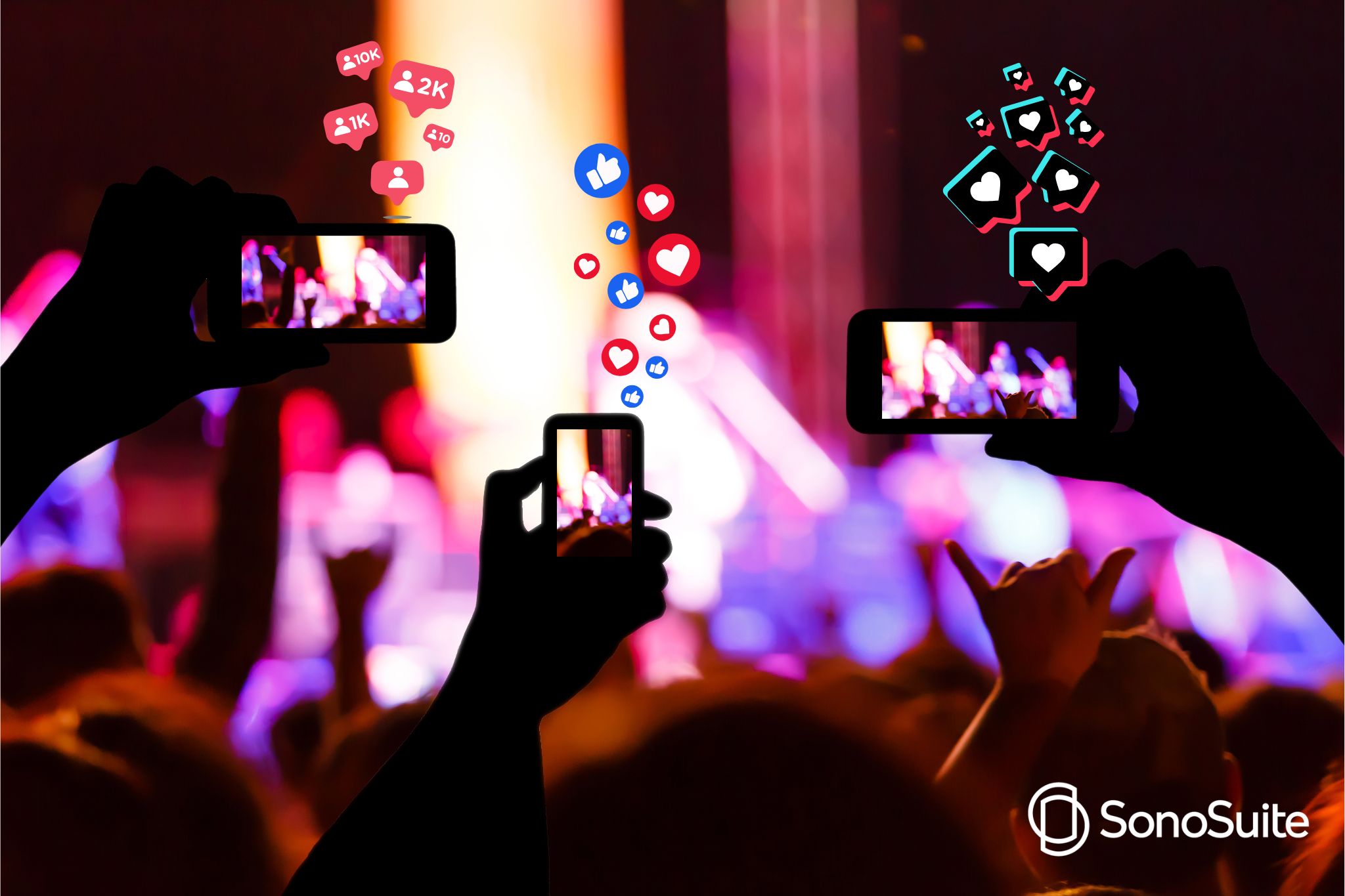
User-generated content is not a social metric. It is a predictive signal for streaming performance.
The campaigns that work during festival season are the ones where the marketing calendar, the release schedule, and the UGC monitoring are running together, not as separate reports reviewed weekly, but as live inputs shaping decisions day by day.
TikTok data isn't just a social metric. It's a leading indicator of streaming behavior.
When a track starts appearing in user-generated content at scale, in video backgrounds, in transitions, in original sounds, it usually precedes a streaming spike by 48 to 72 hours. Labels that catch this early can respond: push the track to playlist editors, activate paid social, brief PR. Labels that see it in hindsight can only observe what they missed.
During festival season, this dynamic accelerates. A track featured in festival footage spreads through TikTok faster than any other period in the year. The organic reach is real, but it's also volatile, it peaks and drops quickly. The labels that capture value from it are the ones with infrastructure to monitor these signals and act on them without a three-day approval cycle.
The specific data points that matter: which tracks are being used in original creations (not just saves or shares), how many unique creators are using a sound, and how those numbers are trending across 24 hour windows. This is different from standard streaming analytics, which reflect what already happened. UGC signals reflect what's happening now.
Festival footage accelerates sound adoption across social platforms, creating short-lived but highly valuable attention windows. The music businesses that capture value from them are the ones with infrastructure to monitor these signals and act on them without a three day approval cycle.
SonoSuite's UGC Trends dashboard surfaces exactly this, TikTok usage data mapped against catalog, updated in near real time, so label teams can see which tracks are gaining traction before it shows up in streaming numbers. During festival season, when the windows are short, that lead time matters.
The goal is a system where distribution, rights, and data are visible and connected, so decisions don't rely on someone manually pulling information from three different places.
The infrastructure matters too. Music businesses running distribution, rights management, and royalty tracking across multiple disconnected tools spend time reconciling data that should already be in one place. That reconciliation time is what makes them slow when a festival moment creates a 48-hour window to respond.
Platforms like SonoSuite are designed for this kind of operation, centralizing distribution, catalog management, rights, royalties, and UGC analytics so label teams can work from a single source of truth rather than assembling reports from separate systems. For smaller and mid-sized labels without large operations teams, that infrastructure matters more during festival season than at any other point in the year.
Festival season is often framed as a promotional opportunity, but in practice it is a test of operational maturity.
The window is short. The difference between capturing momentum and missing it is often measured in hours, not weeks. The strategy is straightforward: start the catalog audit early, coordinate the release calendar with the live schedule, and build the infrastructure to monitor and act on UGC signals in real time. The businesses that are ready when it opens are the ones that benefit most when it closes.
Ready to get your catalog and distribution in place before festival season starts?
Descubre nuestra gama de soluciones diseñadas para impulsar tu negocio musical. Tu negocio musical es único, y nuestras soluciones también lo son. Ofrecemos opciones personalizadas para satisfacer cada necesidad, y nuestro equipo está listo para ayudarte a encontrar la opción perfecta para tu crecimiento.


Por favor, complete este formulario y envíe su consulta. Nuestro equipo de especialistas revisará la información que nos proporcionó para ofrecerle la solución más adecuada.
.jpg)
.avif)
.jpg)